Header
PROJECT 02 · PRODUCT DESIGN + DEVELOPMENT

PlateLoop

PlateLoop was developed as part of the course Technology for Social Media in collaboration with students from Edith Cowan University (ECU), Australia. The ECU students had previously explored the problem space and developed the business and marketing perspective of the concept. I joined a team of five developers responsible for translating the concept into a functional digital product, working across UX, prototyping and development.

Role

UX Designer
Fullstack Developer

Tools & Methods

React Native · Firebase · Expo Router · Figma

Timeline

2025
3 months

01

CHALLENGE

Our starting point was a wicked problem:"How might we support food-service businesses and their customers to collectively reduce waste while balancing profitability, convenience, and sustainability?"

The challenge was not only to address the problem itself, but also to collaborate across two countries and different disciplines. The ECU students had developed the initial business and marketing perspective, while our team was responsible for shaping the concept into a realistic digital product.

One of our main challenges was therefore defining the scope. The original problem was broad, so we needed to identify a specific user group, understand their needs and decide what could realistically be developed within the project timeline.
02

RESEARCH

In order to grasp the scope of this wicked problem, a lot of research needed to be done before developing the actual product. Food waste in this particular area was new for my development group, especially how it works in Australia. We began the project by communicating with ECU students about how food waste is handled in different areas of Australia. After a couple of meetings and discussions, we came to the conclusion to focus on small restaurant businesses, such as food trucks — especially in Perth (where the university is located), since it turned out to be a particularly strong market for this kind of solution.

The ECU students gave us the information that Western Australia has an active waste-reduction policy environment, including the Beyond Waste 2030 Roadmap, which requires local governments to implement food organics and garden organics (FOGO) systems. The research also showed that most small and medium food-service businesses handle food waste informally, with very little systematic tracking. In fact, only around 2% of hospitality food waste in Australia is currently repurposed, with the rest going to landfill. Most of this waste (around 65%) occurs in the kitchen during preparation, overproduction, and spoilage, while about 30% happens at the consumer plate level. This insight became central to our design direction, since it meant the product needed to focus primarily on back-of-house decisions rather than customer behavior alone.

After receiving research from the ECU students, we in Sweden also needed to conduct our own research. We interviewed chefs at restaurants and researched how food waste is handled in Sweden, among other things — all to gather the information we needed to create an application that would actually work in a kitchen. In particular, we wanted a system that could be used by kitchen staff in a real working environment. It shouldn't be something staff try once and then abandon because it takes too much time and effort. Kitchen staff generally work at high speed and don't need something extra to think about.

MoSCoW

moscow

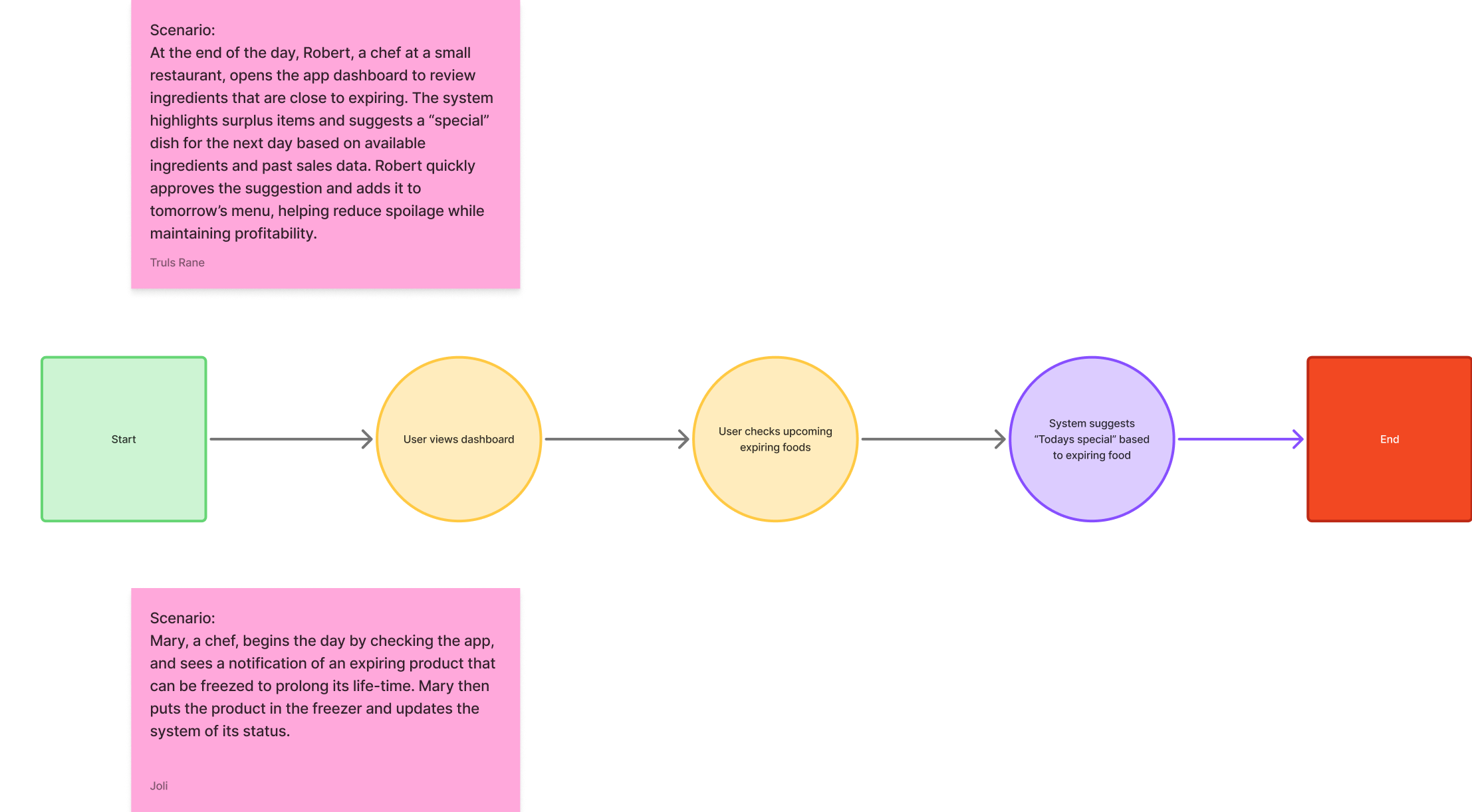
User Scenario

moscow

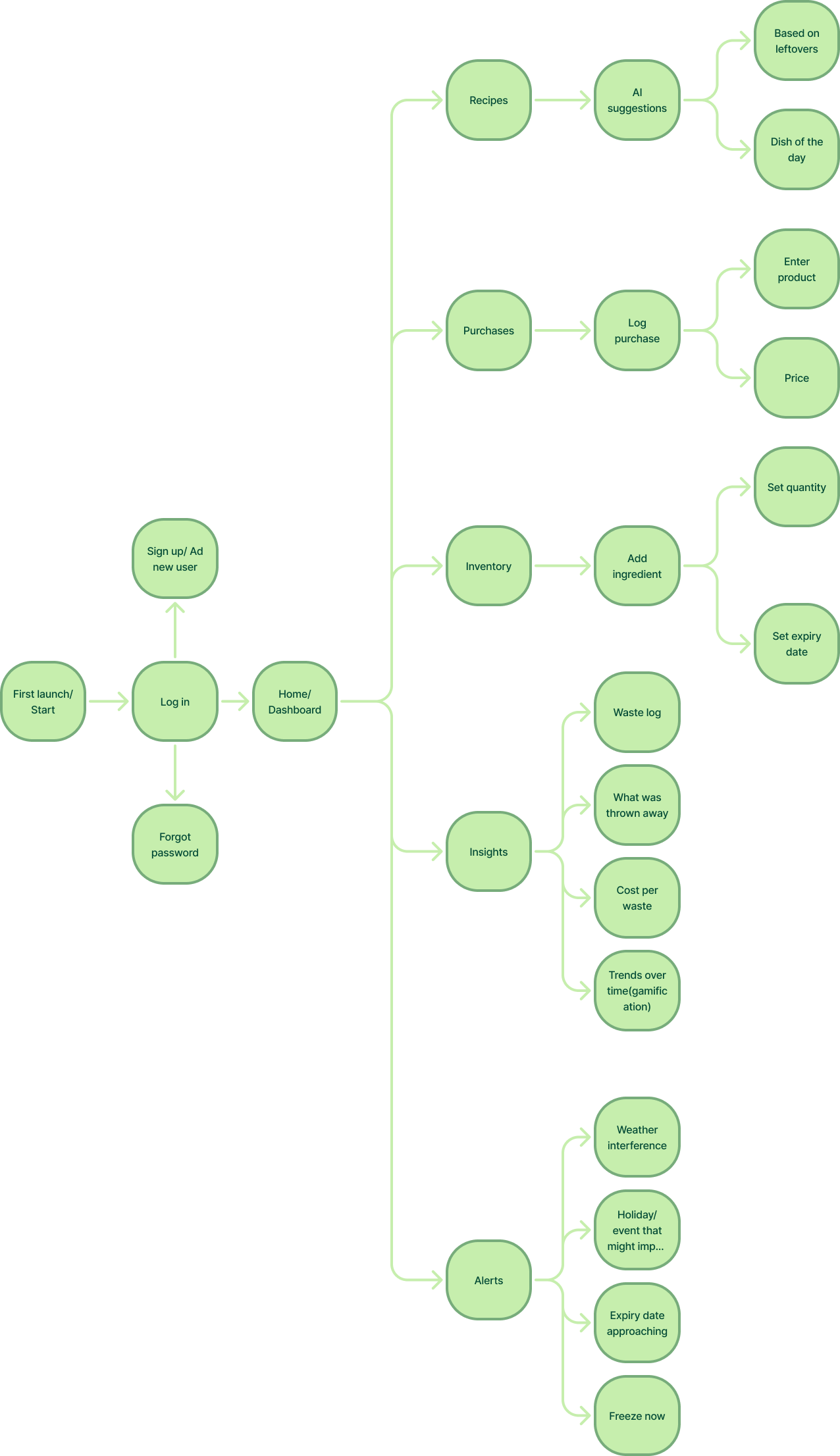
Information Architecture

Information Architecture
03

OUR IDEA

PlateLoop is a digital tool designed to help restaurants reduce food waste while making smarter financial decisions. By combining waste tracking, inventory management and purchasing support in one platform, the application gives kitchen staff a clearer overview of what is being wasted, what is available and what needs to be ordered.

The idea is to make food waste management a natural part of the daily workflow rather than an additional task. By continuously collecting information about waste and inventory, PlateLoop can help restaurants identify patterns, make better purchasing decisions and reduce unnecessary costs.

The application is built around four main functionalities:

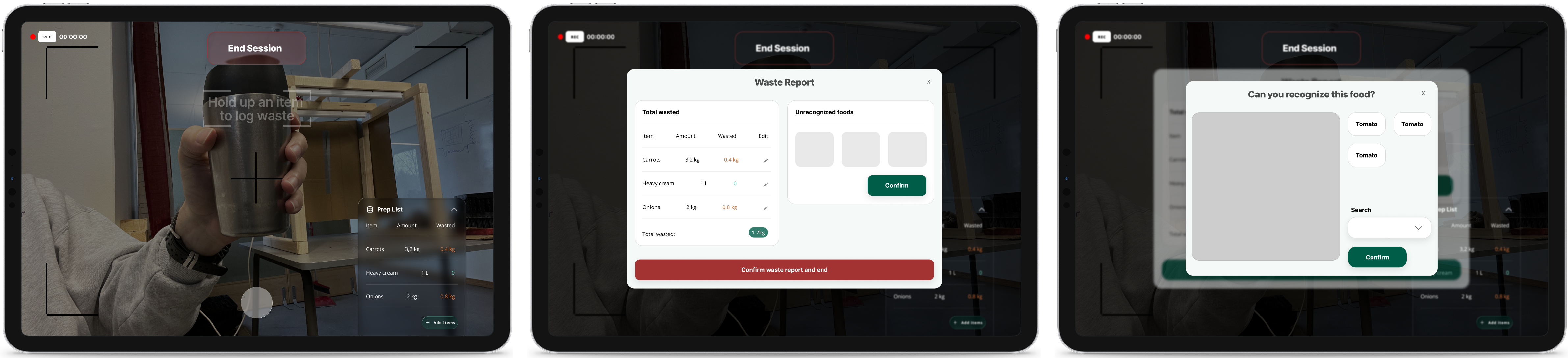
1. Waste tracking: Kitchen staff can quickly record food waste, creating insights into where and why waste occurs.

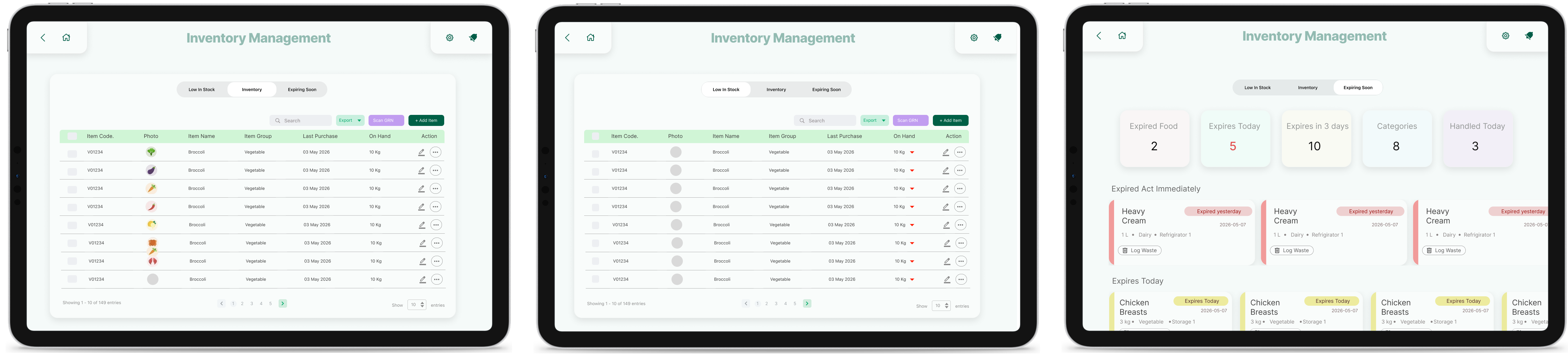
2. Inventory management: Staff can keep track of ingredients in stock and upcoming expiration dates, helping them decide which ingredients should be used first or incorporated into upcoming dishes.

3. Purchasing assistance: The system provides an overview of what is running low and what needs to be ordered, reducing both unnecessary purchases and the time spent managing inventory.

4. Alerts & notifications: Restaurants can receive relevant information that may affect customer demand, such as weather, holidays and major local events. This can help them anticipate changes in demand and adjust their purchasing and preparation accordingly.

04

PROCESS

01

Weekly collaboration meetings

02

Research and problem definition

03

MoSCoW prioritisation and scope definition

04

Brainstorming and low-fidelity prototyping

05

Peer reviews and iteration

06

High-fidelity prototyping in Figma

07

React Native development

05

DESIGN

LoFi prototypes:

Lofi
lofi

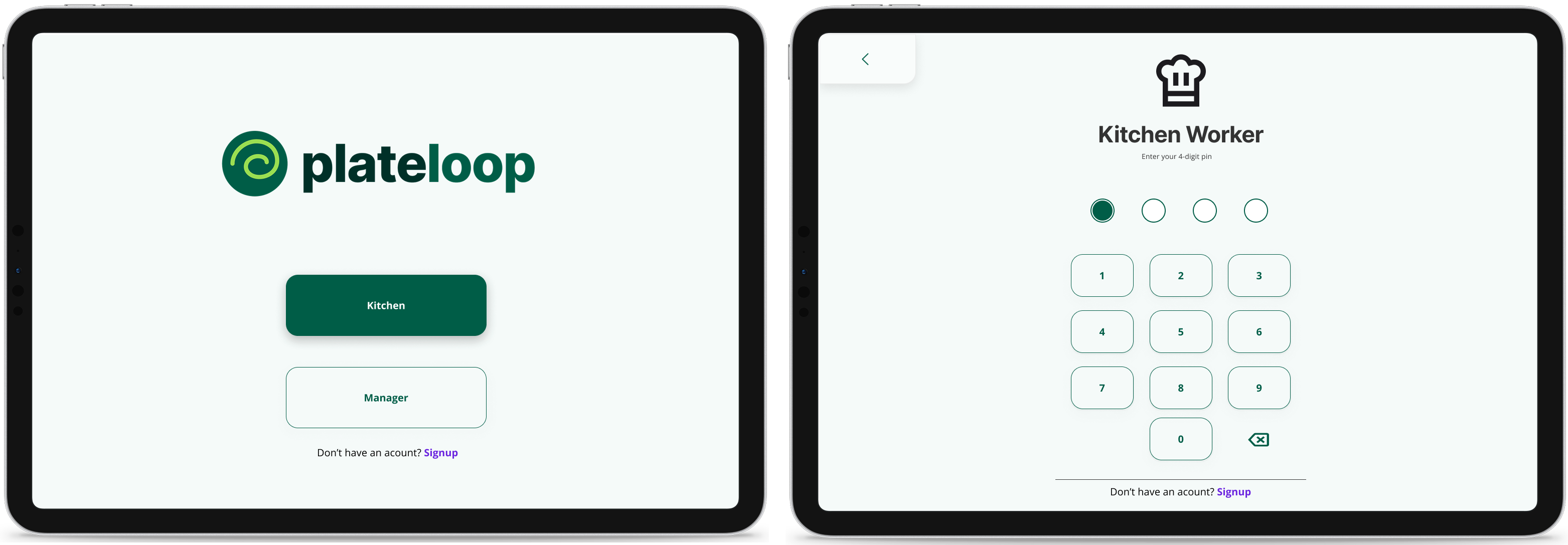
HiFi prototypes (selected screens):

HifiHifiHiFi
06

FINAL RESULT